 Purchase Ebay
Plunger History
Who Needs One?
Archery Companies Package Entry Level Bows with Magnetic Rests to Encourage Plunger Sales.
Advantages: Various Arrow Tunings... adjusting for distance. Disadvantages: Maintenance
| Purchase Ebay |
Tuning Easton Method Plunger History Who Needs One? Archery Companies Package Entry Level Bows with Magnetic Rests to Encourage Plunger Sales. Advantages: Various Arrow Tunings... adjusting for distance. Disadvantages: Maintenance |
| Beiter $130 |
Cartel $40 |
Beiter Clone | Nika Click Action Amazon |
With Finger Release (RF, CF)
Align the “tip” of the arrow point 1
/16" to 1
/8" (1.6-
3.2 mm) or less outside the bowstring with the
bowstring properly centered according to Fig. 7. The
arrow tip is placed slightly outside the string to provide
compensation for the amount the cushion plunger or side
loading device compresses into the bow when the arrow
is released. With a finger release, the arrow bends horizontally, first
bending in toward the bow, then bending away from the
bow, which causes the arrow shaft to leave the arrow rest.
In the next bending sequence, the arrow nock disengages
from the bowstring. The arrow is then on its way, freely
oscillating all the way to the target. The amount of
oscillation decreases as the arrow travels farther from the
bow.
With Mech Comes in various shaft links Superior Spring Positive Click Long Life Most common Olympic   Ebay Ebay Dog Point Dog Point5/16-24 set screw https://www.grainger.com/product/FABORY-Socket-Set-Screw-5XCL9 For backup. See Jennings. Ideally 5/16"-24 Nylon Machine one from remainder SAS Section (might be easiest) ... Stainless Cap screw 5/16" knob May be able to use M8 metric plastic bolt. Use 5/16" bolt with epoxied on felt pad glued on plus nylon washers to space out. Teflon Tape for detent. Thrust Nut? |
   |
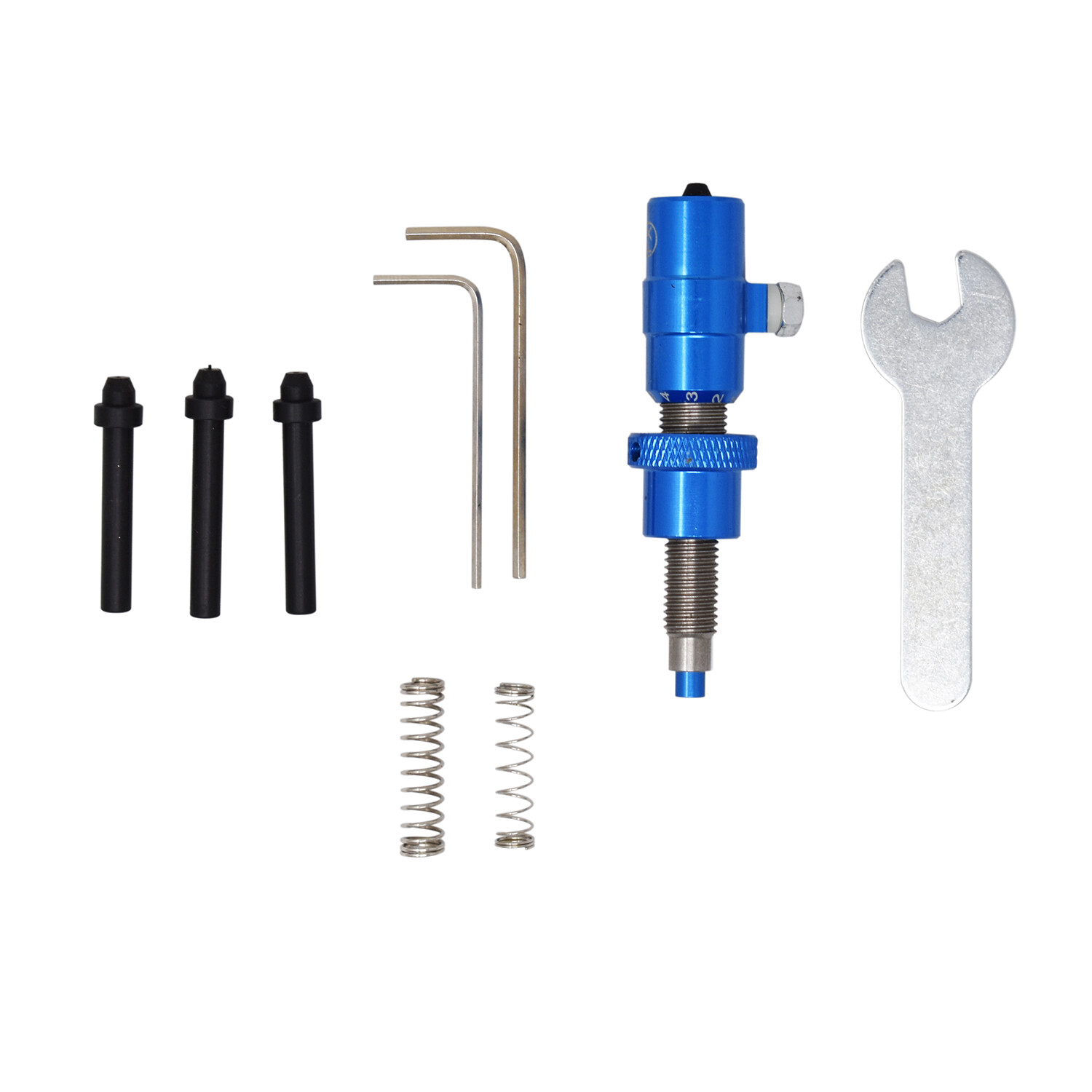 Good Value Great Service Pin is 6mm on Beiter .236" 1 Beiter Plunger with an installed hard spring (0.60) 1 Open Spanner, 1 Spanner 2 springs ”extra hard” (0.70) 1 spring ”hard” (0.60) 2 springs ”soft” (0.45) 1 Allen Head Wrench 1,5mm Pen spring is around 4mm in diameter. Springs Cut to length Springs |
Purchase Ebay Ebay Version Kentucky Ebay USA Reworking Less Expensive Clones Pen Springs Polishing Video Plastic Plunger Contact Point |
| Decut Click |
Avalon Ideallly for Shooting Just one arrow type. | Chinese W/Micro Click*** ~$15 |
Amazon Click |
 |
 |
  |
|
| Alternative |
Alternative |
Alternative SAS $19 for 5 |
|
Beiter Dimensions
|
 |
Full Capture Good In wind. Quiet for Hunting  May interfere with sight picture for instinctive shooters. Set screw from the opposite side of the riser to make sure the bolt does not move. Rug  |
 Ebay Version $4 each @5qty Various Qty's $4 @3qty Jennings  |
Pressure buttons, compensator buttons, plungers... Lots of names, but what does it do and why do we need one at all?
Well the answer is you don't! A six inch nail would be better than an inconsistant pressure button.
Whatever you use needs to work the same every time
The design is to compensate for the inconsistancy in the archer's release and make any differences less noticeable to the flight of the arrow.
It has become the first adjustment when tuning arrows. I think this is a mistake. Whilst a useful aid, I believe it is over used and errors in form and quality of release are attempted to be tuned-out unsuccessfully.
Click-adjustment buttons are the fiddler's delight! Their use is likely to be totally wasted on all but 1 or 2% of archers
Remember, you can only tune as well as you can shoot, but the problem here is that most archers think they can shoot better than they actually can."
Alternatives:
 Online China